MADISON, Wis. (AP) — Archaeologists have identified more than a dozen ancient canoes that Indigenous people apparently left behind in a sort of prehistoric parking lot along a Wisconsin lakeshore.
The Wisconsin Historical Society announced Wednesday that archaeologists have mapped the location of 16 canoes submerged in the lake bed of Lake Mendota in Madison. Tamara Thomsen, the state's maritime archaeologist, said that the site lies near a network of what were once indigenous trails, suggesting ancient people left the canoes there for anyone to use as they traveled, much like a modern-day e-bike rack.
“It’s a parking spot that’s been used for millennia, over and over,” Thomsen said.
Lake Mendota is a sprawling, 15-square-mile (38.8-square-kilometer) body of water on Madison's west side. The state Capitol building and the University of Wisconsin-Madison are located on an isthmus that runs between it and Lake Monona, a 5-square-mile (13-square-kilometer) lake to the east.
The discoveries began in 2021 when archaeologists uncovered the remains of a 1,200-year-old canoe submerged in 24 feet of water in Lake Mendota. The following year they found the remains of a 3,000-year-old canoe, a 4,500-year-old canoe under it and a 2,000-year-old canoe next to it, alerting researchers that there was probably more to the site than they expected.
Working with Sissel Schroeder, a UW-Madison professor who specializes in Native American cultures, and preservation officers with the Ho-Chunk Nation and the Bad River Band of Lake Superior Chippewa, Thomsen has now located the remains of 12 additional canoes, Thomsen said.
Radiocarbon dating shows the oldest of the 16 canoes dates back to 5,200 years ago, making it the third oldest canoe discovered in eastern North America, she said. The two oldest were found in Florida, with the oldest of them dating back 7,000 years, Thomsen said.
Wisconsin experienced a drought beginning about 7,500 years ago and lasting to around 1000 B.C., Thomsen said. The lake in the area where the canoes were found was probably only 4 feet (1.2 meters) deep over that period, she said, making it a good place to disembark for foot travel. The canoes likely were shared among community members and stored at designated points like the Lake Mendota site. Users would typically bury the canoes in sediment in waist- to chest-deep water so they wouldn't dry out or prevent them from freezing, Thomsen said.
Travelers may have been headed to Lake Wingra, a 321-acre (130-hectare) lake on Madison's south side, Dr. Amy Rosebrough, the state archaeologist, said. The Madison area is part of the ancestral homeland of the Ho-Chunk Nation, which views one of the springs that feeds Lake Wingra as a portal to the spirit world, she said.
“The canoes remind us how long our people have lived in this region and how deeply connected we remain to these waters and lands,” Bill Quackenbush, the Ho-Chunk's tribal preservation officer, said in a news release.
Thomsen speculated that if the drought did begin 7,500 years and archaeologists are finding canoes beneath other canoes, they may eventually find a 7,000-year-old canoe in the lake. That could mean Indigenous people that predated many of Wisconsin's tribes may have used the lake, she said.
Thomsen spends most of her days uncovering Great Lakes shipwrecks and works on the canoe project only one day per week. But she called that work the most impactful she has ever done as an archaeologist because she engages with Wisconsin tribes, learns their history and tells their stories.
“I think I've shed more tears over this,” she said. “Talking with the Indigenous people, sometimes I sit here and just get goose bumps. It just feels like (the work is) making a difference. Each one of these canoes gives us another clue to the story.”
LATEST POSTS
- 1
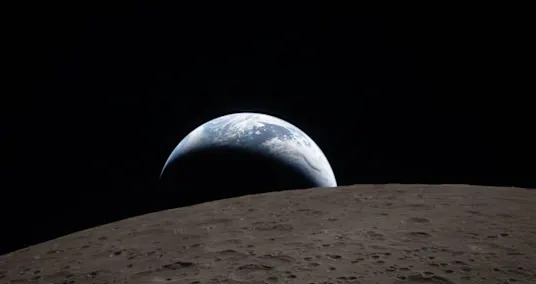
 Artemis 2 captures historic 'Earthset' photo | Space photo of the day for April 7, 2026
 - 2Chinese astronauts’ return to Earth delayed over fears spaceship damaged by debris
- 3Step by step instructions to Open a Lovely Waterway Voyage Insight: Conveniences, Administrations, and Elite Offers
- 4Some Americans say they'll go without health insurance as ACA rates spike
- 5Pick Your Favored kind of soup


- Trump awarded 1st FIFA Peace Prize by Gianni Infantino at 2026 World Cup draw
- An Investigate of 6 Creative Specialty Mixed drinks
- Current Chateaus: Advancement and Style
- 41 Young Men Die in South Africa After Circumcision Initiation
- Iconic iceberg turns blue, on verge of totally disintegrating, NASA says
- Israel strikes south Lebanon after first direct talks in decades
- Osteoporosis, the silent disease, can shorten your life − here’s how to prevent fractures and keep bones healthy
- These four astronauts could soon travel farther from Earth than anyone has gone before
- Finding the Force of Mentorship: Self-awareness Through Direction