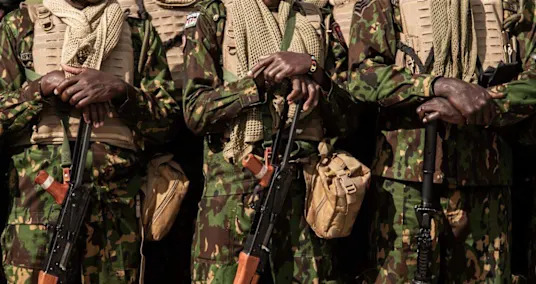
Four cases of rape in Haiti involving members of the departing Kenya-led Multinational Security Support mission, including one involving a 12-year-old girl, have been investigated and corroborated, a United Nations report says.
The U.N. said it received the reports of sexual exploitation and abuse involving personnel from the Kenya-led anti-gang force in Haiti last year, and they were referred to the commander of the mission for investigation and action.
“All the allegations were found to be substantiated by investigations conducted by the Office of the United Nations High Commissioner for Human Rights,” said the report on Special Measures for Protection from Sexual Exploitation and Abuse.
The police-led anti-gang force has consisted mostly of cops from Kenya and is not specifically a U.N. mission, although it was authorized by the Security Council in 2023. The four allegations were listed in the report under “Non-United Nations force.”
The mission, now in the process of withdrawing from Haiti, deployed its first personnel to the Caribbean nation in June 2024. A one-page summary of the four cases did not provide many details on the allegations. The report lists four cases under the category of mission personnel, and the ages of the four female victims: 12, 16, 16 and 18 years old. Under the reports’ findings, all of the cases said: “Violation corroborated.”
All but one lists “pending” under action taken. In the case of the 12 year-old, the report says that an internal investigtion was conducted by the mission itself. No further details were provided.
The Miami Herald has reached out for comment to the mission’s force commander, Godfrey Otunge, spokesman Jack Mbaka and the Office of the United Nations High Commissioner for Human Rights but has received no response.
Stéphane Dujarric, the spokesman for Secretary-General António Guterres, said the U.N. has “flagged” the issue for follow-up with the new anti-gang force that officially began its deployment Wednesday and the force’s special representative, Jack Christofides.
READ MORE: ‘Unimaginable’: The toll on Haiti’s women and girls raped by violent gangs
In its report last week, the office of the high commissioner for human rights noted that it will be crucial, as the new force is deployed n Haiti, to put in place mechanisms to prevent, investigate, deal with and publicly report on potential human rights violations and abuses, including sexual exploitation.
“These safeguards and mechanisms will strengthen the effectiveness” of the new force’s operations, the report said.
The rape allegations involving the Kenya-led mission were first reported by AyiboPost, a Port-au-Prince based online news service.
The issue of sexual exploitation and abuse by members of foreign forces has long been a concern in Haiti, where reports of sexual abuse and exploitation dogged a U.N. peacekeeping force in Haiti before it concluded its mission in 2017. To address the problem, the U.N. publishes the nationalities of soldiers accused of sexually exploiting and abusing women and girls. There is also a trust fund to support victims.
LATEST POSTS
- 1
 Building a Flourishing Business: Illustrations from Business people
 - 2From Lounge chair to Money: Online Positions That Will Change Your Profession
- 3NASA Artemis II tracker: Crew less than 60,000 miles from moon ahead of Monday flyby
- 4Reactions as Artemis II astronauts lift off on historic lunar mission
- 510 Picturesque Campgrounds That Will Raise Your Outside Involvement with American





- Step by step instructions to Pick A Pre-owned vehicle Stage
- They grew up with 'almond moms.' Now, they dread going home for the holidays.
- French and Malaysian authorities are investigating Grok for generating sexualized deepfakes
- Popular Home Rug Series For You
- Emergency services search for five people last seen in missing Jeep
- Mickey Lee of 'Big Brother' fame dead at 35 after flu complications, family says
- Warming winters lead to more nitrate pollution in the drinking water near farms
- People who talk with their hands seem more clear and persuasive – new research
- British-Egyptian dissident apologises for tweets as Tories push for UK deportation